Voice Cloning Is Breaking KYC: The $1.8B Crisis
Financial institutions lost $1.8B to AI voice cloning in 2025. Here's why phone-based identity verification is now fundamentally compromised—and what must change.

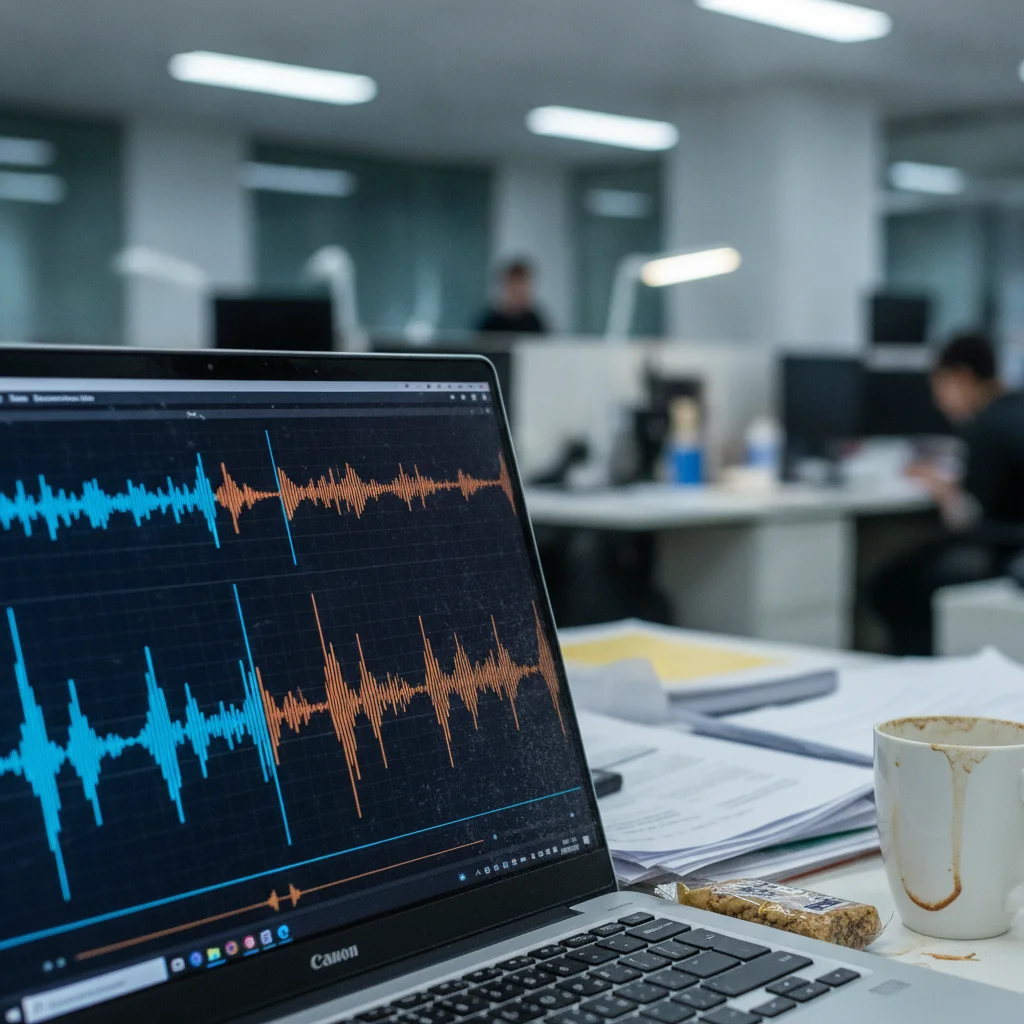
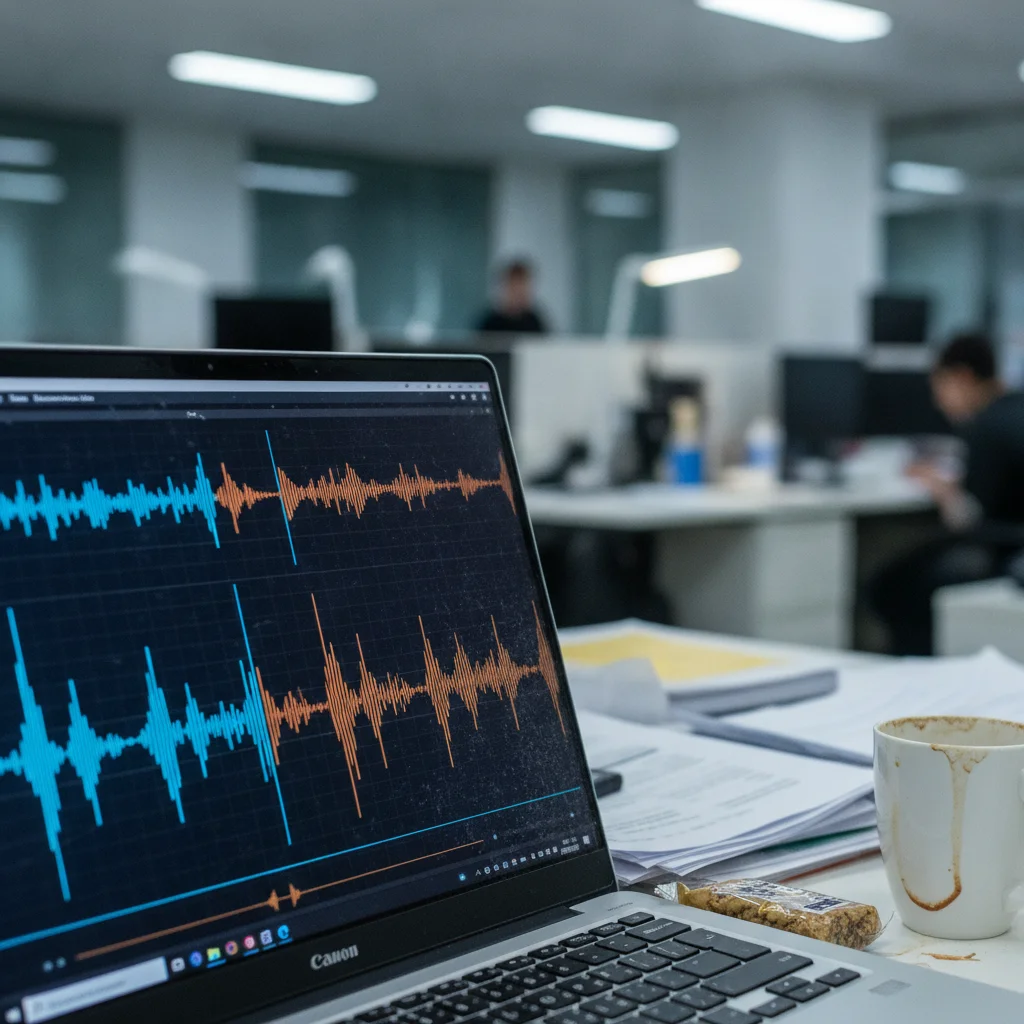
AI voice cloning fraud cost financial institutions $1.8 billion in 2025 by itself. INTERPOL's March 2026 Global Financial Fraud Threat Assessment put that year's total AI-enabled fraud losses at $442 billion. In the United States, voice phishing attacks jumped 1,600 percent from Q4 2024 to Q1 2025 — a category that, a decade earlier, was barely tracked at all. The people committing the crimes did not change. The cost of the tools they could buy did.
Voice cloning with AI has left specialty tradecraft behind and become a commodity. Clone a target's voice from three seconds of publicly available audio and the services that do it sit below $50 per month. Real-time voice synthesis, producing convincing audio responses in under 300 milliseconds, is sold off the shelf. Identity verification therefore faces a structural problem: the human voice, among the oldest and most widely deployed authentication signals, can now be forged at industrial scale with almost no friction.
How these attacks land on KYC flows, which institutions sit in the blast radius, why today's defenses fail to hold, and what a defense architecture that actually works looks like are the questions this article takes up.
How Voice Turned Into a Security Liability
Identity checks built on voice started from a defensible premise: a person's voice is unique enough, and hard enough to copy, that it can serve as a trustworthy authentication signal. Through the 2010s, banks, insurance companies, and telecoms made voice biometrics — creating and matching voiceprint profiles — a pillar of call center authentication, phone-based account opening, and IVR-gated access.
That premise has not held up.
Datasets large enough to absorb the acoustic details that separate one speaker from another now train modern voice synthesis models: pitch contour, formant frequencies, prosody, speaking rate, breath patterns, and regional accent features. Give them a clean audio sample of sufficient length — three seconds in current commercial offerings; some tools claim usable output from shorter clips — and they generate novel utterances in the target's voice. Those utterances pass casual human listening and, more and more often, automated voiceprint matching systems as well.
The audio an attack needs is not hard to find. Earnings calls, podcast recordings, conference presentations, and social media video content all carry executives' voices. Retail banking customers' voices are captured routinely by call center recording systems; those recordings sometimes leak through data breaches or social engineering attacks aimed at the contact centers themselves.
How a Voice Cloning Attack Against KYC Is Built
A three-phase pattern repeats, with little variation, when a voice cloning attack is aimed at a financial institution.
Phase 1: Audio acquisition. A target is chosen — typically a high-value account holder, a beneficial owner under enhanced due diligence, or an employee with authorization levels — and audio is harvested from publicly accessible sources. A two-minute earnings call excerpt, a LinkedIn video, or a YouTube conference appearance supplies enough raw material for modern cloning tools.
Phase 2: Model generation and testing. A commercial voice synthesis service or an open-source model (both are widely available) trains the voice clone. Output is then tested against challenge phrases typical of IVR or live agent verification flows. The whole sequence can finish in under thirty minutes.
Phase 3: Attack execution. The cloned voice is presented over a VOIP call. In more sophisticated attacks, a real-time voice morphing pipeline maps the attacker's own speech onto the cloned voice with sub-second latency, which lets the attacker hold a natural two-way conversation with a live agent.
Higher-end attacks pair voice cloning with video injection. The same fraud-as-a-service ecosystem that produced JINKUSU CAM — the $15 KYC bypass tool targeting Binance and Coinbase now routinely stacks voice synthesis onto video deepfake layers, so both the face and the voice of a target can be forged during a live video verification session at the same time.
Which Workflows Sit in the Blast Radius
Material exposure now applies to any KYC or authentication flow that treats voice as a primary or secondary signal. Workflows at risk include:
Phone-based account opening. Dual exposure hits financial institutions that let customers open accounts or upgrade service tiers by telephone, completing verification through knowledge-based questions and voice biometric enrollment. Breached or publicly available data can answer knowledge-based questions. A cloned voice can complete voice biometric enrollment.
Call center authentication. Retail banks and telecoms rolled out "my voice is my password" passphrase verification at scale in the early 2020s, as a customer-friendly alternative to security questions. Once a cloned voice matches the enrolled passphrase, the attacker receives full authenticated session access.
IVR-gated account management. Interactive voice response systems that authenticate by automated voice give attackers even less friction than live agents: no person is present to catch unusual hesitation, contextual incongruity, or call pattern anomalies.
Video KYC with voice challenges. Voice challenges inside video-based KYC — asking the subject to read a random phrase aloud — do not automatically confer protection. As documented in the analysis of liveness detection failing against injection attacks, a voice clone routed through a virtual audio device can meet voice challenge requirements while a separate video deepfake covers the visual channel. The five attack vectors already operating against bank onboarding in 2026 share one trait: they stack attack layers instead of relying on a single technique in isolation.
Why Current Defenses Do Not Hold
Voice fraud first drew a predictable industry response: extra authentication requirements stacked onto a compromised baseline. Treating the voice signal as still meaningful is the failure mode, even though the structural problem is that it is not.
Voiceprint re-enrollment cycles. Periodic re-enrollment is forced by some institutions to stop stale model reuse. Compliance overhead rises, yet the attack is untouched: a voice that can be cloned today can be cloned after re-enrollment as well.
Anti-spoofing classifiers. A more substantive response is audio-domain liveness detection: classifiers trained to tell synthesized speech from natural speech. Those models, however, sit in an adversarial arms race with synthesis models. Better synthesis quality forces anti-spoofing classifiers to retrain. Against state-of-the-art voice synthesis models, current commercial anti-spoofing accuracy has dropped significantly from benchmarks set as recently as 18 months ago.
Adding a second factor. Risk drops in a meaningful way when multi-factor authentication includes a voice-independent second factor (an OTP, a hardware token). That drop disappears if the second factor is itself voice-dependent — a secondary IVR step, for example — or if the voice factor carries disproportionate trust weight in the overall verification decision.
A Defense Architecture That Actually Holds
Responding adequately to voice cloning in identity verification means abandoning the idea that any single biometric signal stays durable. Three layers, combined, are what hold against the current threat.
Signal diversity and independence. An identity verification flow should not rest on a single spoofable biometric as its load-bearing element. Independent evidence arrives from document verification, facial biometrics with hardware attestation, behavioral signals (device fingerprint, interaction timing, network characteristics), and contextual signals (account history, transaction patterns, device location). Cloning a voice does not automatically grant an attacker all of these at once.
AI-driven anomaly detection across the full session. Continuous verification watches the complete session for signals that clash with the established identity profile, instead of issuing a binary pass/fail at the moment of authentication. Unusual call patterns, a mismatch between stated location and device IP, or an interaction sequence that diverges from the customer's historical behavior are all detectable, and voice cloning does not cover them.
Autonomous agent-based orchestration. Volume and speed of voice cloning attacks leave purely manual review insufficient at scale. Agentic KYC — autonomous AI agents that ingest multiple verification signals in parallel, escalate anomalies to human review in real time, and adapt detection logic as new attack patterns emerge — is the architecture built for this threat environment. Joinble's autonomous compliance agents exist specifically to coordinate multi-signal verification without treating any single biometric as the source of truth.
What Supervisors Expect and Watch For
Voice-based authentication at financial institutions is starting to draw heightened scrutiny from regulators.
A dedicated section on AI agents as an emerging supervisory concern appeared in FINRA's 2026 Annual Regulatory Oversight Report, with specific risk categories covering data sensitivity failures in automated verification workflows. Voice cloning is not named in the guidance, yet the underlying concern — that automated systems can be compromised in ways a human reviewer would catch — maps directly onto voice-based authentication.
Demonstrated liveness detection and anti-spoofing controls must sit inside remote customer verification under the EU's AMLA. Remote customer identification has to meet procedural safeguards equivalent to in-person verification, and institutions are expected to update their technical controls as threats evolve. A verification flow that leans on voice as a primary or sole biometric would struggle to satisfy these requirements without supplementary controls.
For the first time in its 26-year history, the FBI's 2025 Internet Crime Report treated AI-related fraud as a distinct crime category, logging more than 22,000 complaints with adjusted losses exceeding $893 million. That classification tells regulators and law enforcement that AI-enabled fraud — voice cloning included — is a distinct risk that needs distinct controls.
What the Attack Now Costs
Anchor the threat in its current cost structure. As of mid-2026, real-time voice cloning services sit at approximately $30–50 per month in subscription tiers marketed to legitimate creative and productivity use cases. Open-source alternatives demand more technical skill but no financial outlay. Audio harvesting — locating and downloading publicly available recordings — costs only time.
A $50 monthly subscription plus a three-second audio sample is the barrier to a voice cloning attack against a standard voice-biometric KYC flow. Institutions still running 2023-era threat models — where cloning needed expensive hardware and rare expertise — are working from a risk assessment that is fundamentally outdated.
| Attack component | Barrier in 2020 | Barrier in 2026 |
|---|---|---|
| Voice clone generation | Specialized ML expertise, expensive GPU | $30–50/month subscription |
| Audio harvesting | Specialized tooling required | Any public recording, 3 seconds minimum |
| Real-time voice morphing | Research-grade infrastructure | Commercial API, sub-300ms latency |
| Full attack pipeline | Nation-state or organized crime capability | Available to solo actors |
FAQ
What is AI voice cloning in the context of identity fraud? AI is used to synthesize a convincing replica of one person's voice from a short audio sample. Attackers then present those cloned voices during phone-based verification, call center authentication, or voice biometric checks, impersonating account holders and bypassing identity controls without physical access to the target's documents or devices.
How little audio does an attacker need to clone a voice? Usable output can come from as little as three seconds of audio with current commercial voice cloning services. Longer samples still produce higher-quality clones, yet the barrier has fallen far below what financial institutions typically assume when they deploy voice biometric systems.
Are "my voice is my password" systems still secure in 2026? Standalone voice biometric systems, in their current form, are not adequate against modern AI voice cloning. Voiceprint matching without additional independent verification signals can be defeated by a sufficiently high-quality voice clone. Voice should be treated as one signal among many rather than a primary or standalone authentication factor, according to security researchers and regulators.
What does AMLA require for remote identity verification? Demonstrated liveness detection and anti-spoofing controls must be part of remote customer verification under AMLA guidance. Procedures have to provide assurance equivalent to in-person verification, and technical controls must be updated as threats evolve.
How does voice cloning differ from deepfake video attacks? Visual biometric verification is the target of video deepfake attacks — documented in bank onboarding breach cases — which forge a face in a video stream. Audio channels are the target of voice cloning: phone calls, IVR systems, voice biometric enrollment, and the audio layer of video KYC sessions. Sophisticated attacks in practice combine both vectors at once.
What is the difference between voice cloning and synthetic identity fraud? Authentication-layer impersonation of a specific real person, by replicating their voice, is what voice cloning does. Synthetic identity fraud fabricates identities from invented or combined identity elements, hitting a different layer of the verification process. The two attack types complement each other and are increasingly used together in coordinated fraud operations.
Related Articles

One in 100: How Deepfakes Are Breaking ID Checks at Scale
LexisNexis: 1 in 100 failed identity checks involves a deepfake. At 100 billion annual checks, the math makes this a systemic infrastructure crisis.

The $40B AI Fraud Crisis: The Industry Fights Back
Deloitte projects AI-enabled fraud will reach $40 billion by 2027. Here is how the financial industry's landmark 20-point plan reshapes KYC compliance.

Stolen Voice Data: What the Mercor Breach Means for KYC
In April 2026, Lapsus$ stole 4TB of voice biometrics and ID documents from Mercor. Here's what every KYC team needs to know about this new threat.