Face Alone Is No Longer Proof: Multimodal Liveness in KYC
Deepfake losses hit $3.7B in 2026. Here is why single-signal biometric liveness checks are failing — and what multimodal KYC verification requires.

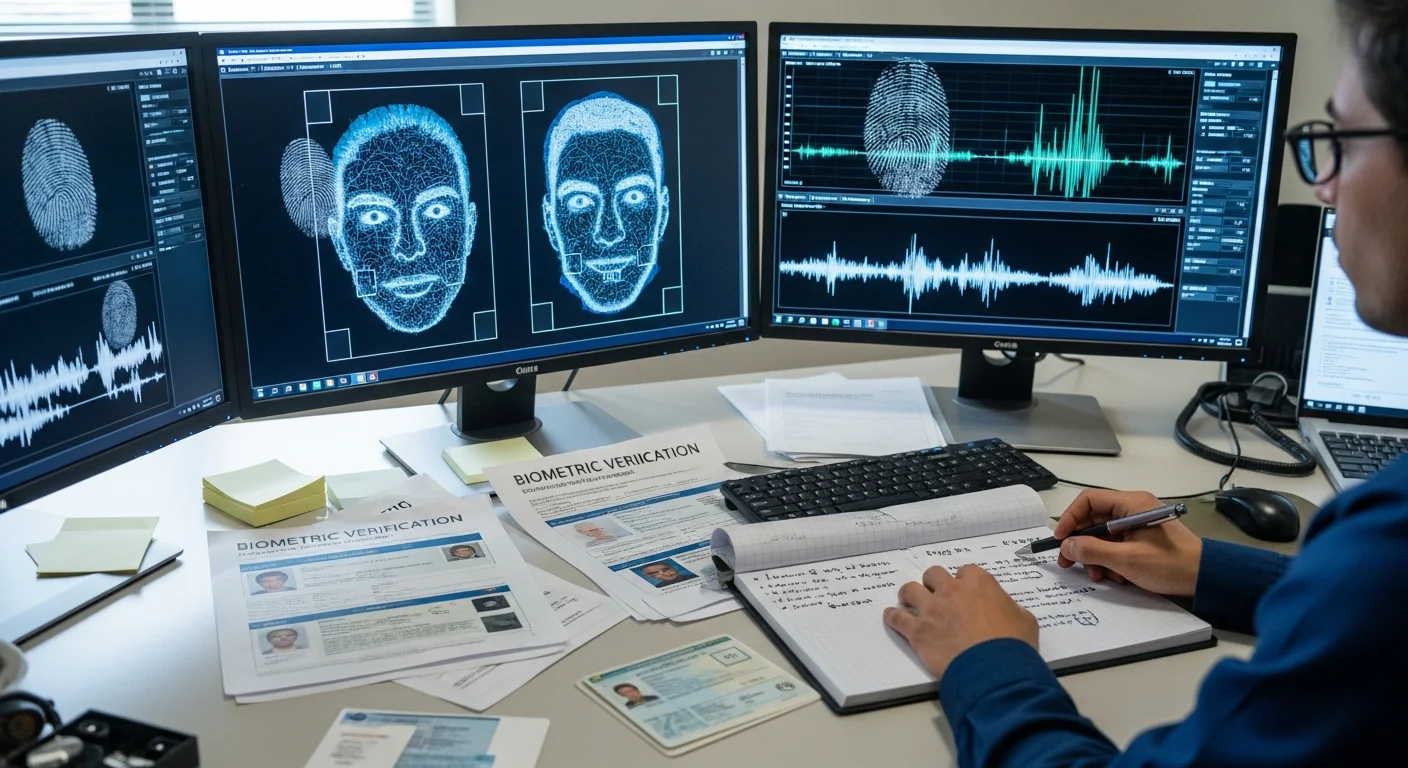
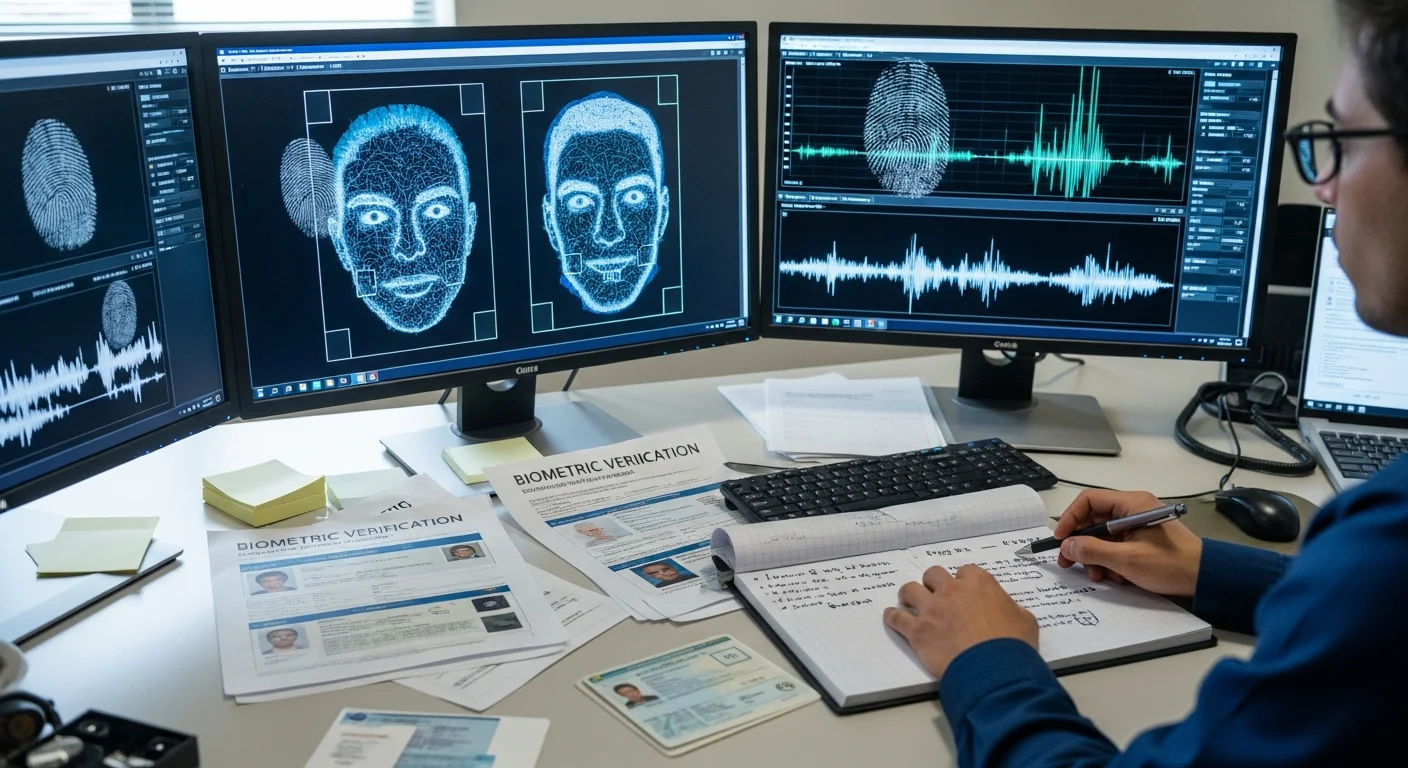
A Gartner forecast issued in early 2026 has, for practical purposes, already landed: by mid-2026, 30 percent of enterprises would no longer treat face biometric solutions as reliable on their own. Facial recognition had not gotten worse. Generative AI had simply outrun the defenses built to inspect it.
What practitioners already see in production was documented by Biometric Update in July 2026: the deepfake threat is forcing identity verification past single-signal biometric checks. The figures behind that move are not ambiguous. Recorded global deepfake fraud losses reached $3.7 billion, with 89 percent of that total concentrated in 2025 and 2026. More than 8,000 deepfake-enabled identity fraud attempts were logged by a single financial institution in eight months. Layered with synthetic identity fraud and account takeover, AI-generated identity crime now exceeds $400 billion in annual losses globally.
Multimodal biometric liveness, the industry's answer, is not a modest upgrade to existing KYC stacks. Identity assurance itself is being redesigned around a different set of requirements.
Where a Single Signal Breaks Down
An applicant submits a government-issued document, captures a selfie or short liveness video, and a matching algorithm compares the two: that is the architecture most KYC systems deployed between 2019 and 2024 share. Presentation Attack Detection (PAD) — the technical name for liveness detection — runs next to the face match so the selfie can be shown to come from a live person rather than a still image or a pre-recorded clip.
That design matched the threat that existed when it was drawn. Printed photographs held to a lens, or video played in front of a camera, are the presentation attacks PAD was built to stop. ISO 30107-3, the main certification standard for biometric PAD, was written around precisely that threat model.
Attackers have since left the camera behind. Synthetic biometric data can be fed straight into an application's API pipeline by injection attacks, skipping the physical sensor. Where presentation attacks remain the path, generative AI now yields deepfakes that beat single-modal face analysis — real-time face replacement, voice synthesis, and synthetic identity documents assembled for under $15 per kit.
Too little entropy sits in one biometric signal to tell a genuine person from a sophisticated synthetic with reliable accuracy. A single data point is cheap to forge once the tools cost less than a restaurant meal.
What Multimodal Liveness Actually Covers
Several independent biometric and behavioral signals are combined in one session under multimodal liveness verification, subject to two conditions: faking the signals at the same time must be hard, and the system must confirm they remain consistent with each other.
A production-grade multimodal system draws on four signal categories:
| Signal Type | What It Measures | Deepfake Resistance |
|---|---|---|
| Visual biometrics | Face geometry, micro-expressions, skin texture | Moderate — face-swaps can defeat this alone |
| Voice biometrics | Pitch, cadence, spectral characteristics | Moderate — voice cloning is now cheap |
| Behavioral signals | Typing patterns, touch dynamics, interaction timing | High — difficult to synthesize convincingly |
| Environmental/device signals | Device fingerprint, network metadata, sensor data | High — requires hardware compromise to spoof |
Look at the resistance column for the binding point. Isolated, no single signal is enough — convincing attacks against each of them already exist in the deepfake fraud ecosystem. What those attacks still cannot produce with conviction is a synthetic identity that clears face verification, voice verification, behavioral analysis, and device consistency checks at once, because an attack tuned for one modality tends to leave artifacts in the others.
Cross-Modal Consistency as the Detection Frontier
Cross-modal consistency analysis — catching the small desynchronization between visual and audio signals that deepfake generation leaves behind — is the most significant multimodal-liveness development of 2026.
Lip movement, facial muscle activation, and the audio signal line up in highly consistent, predictable ways whenever a person speaks. Those correlations run at the millisecond level:
- The timing relationship between lip aperture and phoneme onset
- Cheek and jaw muscle movement patterns associated with specific consonants
- Micro-facial deformations produced by air pressure changes during speech
Separate datasets, with different latency characteristics, train the generative systems that emit deepfake video and AI voice synthesis. Combined in a live fraud attempt, they leave small desynchronization artifacts that people miss and that cross-modal consistency algorithms can still catch.
July reporting from Biometric Update placed the detection frontier exactly there: cross-modal consistency checking between lip movement and speech audio. An enhanced multimodal verification service built around this approach was launched by Regula Forensics. On-device deepfake detection for live video calls, aimed at the same desynchronization signals, was released by Qualcomm and Scam.ai.
A structural edge follows. Video synthesis and voice synthesis — two separate AI systems — must both improve, while cross-modal synchronization is held, before an attacker can win. The optimization pressure needed to beat cross-modal consistency checking sits well above the pressure needed to beat any single-modal detector.
Behavioral Biometrics as a Second Layer
How a person handles a device, rather than how a face or voice looks, is what behavioral biometrics reads. That yields a different kind of liveness assurance, one that resists a different class of attack.
Signals captured by behavioral biometrics:
- Keystroke dynamics: The timing patterns between key presses, which are as individually distinctive as fingerprints for regular users
- Touch and mouse movement: Micro-movements, acceleration patterns, and pressure characteristics
- Interaction rhythm: The pace at which a person navigates a form, pauses, and re-reads fields
- Cognitive latency patterns: Response timing consistent with human decision-making rather than the instant responses of automated tooling
Consistent behavioral anomalies show up in fraud toolkits built to inject synthetic biometrics into verification APIs. Forms are driven faster than a person would drive them, timing patterns land with improbable regularity, and signatures often match known fraud infrastructure rather than human behavior.
A projected $4.26 billion by 2027 for the behavioral biometrics market reflects a fraud class visual biometrics cannot cover: the synthetic identity that already passed initial verification and is now operating inside the system. Who claimed to be present at onboarding is what a face check confirms. That the same person still runs the account is what behavioral biometrics confirms.
Integration between liveness detection and continuous monitoring is the hinge. Checking liveness at onboarding and never again only asks whether a real person was present at a specific moment — not whether a real person is operating the account now. Identity signals are continuously re-evaluated by Joinble's AI agents against the behavioral baseline set at onboarding, so drift is flagged for re-verification before fraud executes rather than after.
Consistency of Environmental and Device Signals
Neither face synthesis nor voice cloning currently reaches the third signal layer: the device and environmental context of a verification session.
Hardware fingerprints unique to real physical devices, sensor consistency patterns, operating system attestation, and network characteristics sit among the device signals. Ambient noise profiles, lighting consistency, and background environment patterns sit among the environmental ones.
Controlled environments — development machines running virtual camera software and API injection toolkits — are where fraudsters staging injection attacks work. Those environments leave characteristic signatures:
- Device fingerprints matching known fraud infrastructure
- Absence of ambient noise consistent with a genuine user environment
- Lighting conditions too controlled and uniform for a real-world setting
- Network metadata associated with proxies, VPNs, or data center infrastructure rather than residential or mobile connections
A rich pattern of consistent signals is what a genuine verification from a real person on a real mobile device in a real environment produces. Environmental authenticity is typically traded away by a fraud attempt optimized for biometric spoofing, in order to keep biometric fidelity. That tradeoff can be detected.
What the Standards Currently Cover
Biometric anti-spoofing is framed by the ISO 30107 standard series:
- ISO 30107-3: Presentation attack detection — the current primary certification standard, covering physical spoofing in front of a camera
- ISO/IEC AWI 30107-4: Under development — addresses injection attack resistance and multimodal verification requirements
Regulation has not yet caught the multimodal shift. "Reliable identity verification" under the AMLR — applying from July 2027 — and AMLA's forthcoming Regulatory Technical Standards still stop short of spelling out multimodal requirements. Our analysis of AMLA's CDD RTS breaks down what those technical standards will demand from identity systems.
Organizations assembling multimodal architectures now sit ahead of the mandate — building to the standard the evidence already shows is necessary, not the one currently written down. Regulatory catch-up is predictable. The fraud trajectory is already visible.
From a Liveness Check to a Liveness Architecture
Calling "liveness detection" a feature — a box in a compliance workflow — understates what the 2026 threat environment actually requires.
A liveness check (one validation at a single moment) is giving way to a liveness architecture (a continuous, multi-signal system that treats every interaction as a chance to reconfirm identity). A production liveness architecture in 2026 includes:
- Cross-modal consistency verification at onboarding — simultaneous face, voice, and behavioral analysis with consistency checking across signal types
- Device attestation — cryptographic verification that biometric data originates from real hardware, not virtual camera software
- Environmental signal analysis — flagging sessions where context is inconsistent with genuine user behavior
- Behavioral baseline establishment — capturing interaction patterns at onboarding for continuous comparison afterward
- Continuous re-verification — AI-driven monitoring that flags behavioral drift and triggers targeted re-verification when risk escalates
Economics matter, as the context on how deepfake-as-a-service marketplaces have made biometric fraud accessible at commercial scale makes clear: the same marketplace infrastructure selling synthetic identity kits for $15 is now selling anti-detection tooling optimized to defeat single-modal verification. Attack cost rises sharply under multimodal architectures — not infinitely, but enough to push fraud toward softer targets.
Questions Procurement Teams Should Put in 2026
"Multimodal" is now marketed across the identity verification vendor field with widely varying levels of actual implementation. Questions that separate a genuine multimodal architecture from a slogan:
- Which signal modalities does the system verify simultaneously? Face plus a simple liveness gesture is not multimodal.
- Does the system perform cross-modal consistency checking between audio and video?
- What device attestation method is used? Hardware-level, OS-level, or none?
- What behavioral signals are analyzed, and at what granularity?
- Has the system been tested against current-generation deepfake and voice cloning tools? What are the bypass rates?
- Does the system establish a behavioral baseline for continuous post-onboarding comparison?
- What is the system's status relative to ISO 30107-4?
Protection against presentation attacks — the 2019-era threat — is what ISO 30107-3 certification attests. It is a starting point. Multimodal test results are the specific ask for 2026's threat landscape.
Tactics documented in the background on how deepfakes are specifically attacking banking onboarding flows show why each layer on its own is insufficient and why only a multimodal architecture covers the full attack surface.
Frequently Asked Questions
What is multimodal biometric liveness verification?
Face, voice, behavioral patterns, and device and environmental signals — multiple independent signal types — are combined in a single session under multimodal biometric liveness verification. Single-modal verification (face-only liveness) does not demand consistency across signals that are hard to fake at the same time; multimodal verification does, which raises the cost of attacks optimized for any one modality.
Why is face biometrics alone no longer sufficient for KYC liveness?
Convincing face synthesis is available through generative AI tools for under $15 per session. Face biometric solutions are no longer treated as reliable in isolation by 30 percent of enterprises, Gartner confirmed in 2026. A single signal synthesized at scale by automated tooling no longer carries enough entropy to tell genuine identity from synthetic identity with reliable accuracy.
What is cross-modal consistency checking?
Whether several biometric signals from a verification session match one another at the precision genuine interactions naturally produce is what cross-modal consistency checking measures. Audio-visual synchronization is the clearest case: predictable timing between lip movements and audio is created by human speech, and deepfake systems — trained on separate video and voice datasets — typically miss that timing at millisecond precision. Catching that desynchronization now sits at the front of deepfake detection.
How does behavioral biometrics complement visual liveness detection?
Keystroke timing, touch dynamics, interaction pace, and cognitive latency patterns — how a person uses a device — are what behavioral biometrics captures. Characteristic behavioral anomalies appear in fraud toolkits that deploy synthetic biometrics: superhuman interaction speed, improbably consistent patterns that visual liveness detection cannot see. Continuous post-onboarding re-verification also rests on behavioral biometrics, stretching identity assurance past the onboarding moment.
What does ISO 30107-4 add to current PAD standards?
Physical spoofing in front of a camera — presentation attacks — is what ISO 30107-3, the current primary standard, certifies protection against. Injection attack resistance and multimodal verification requirements are the subject of ISO/IEC AWI 30107-4, currently under development. Protection against injection attacks or the full range of current threats is not certified by ISO 30107-3 until 30107-4 is finalized and adopted.
How does continuous monitoring extend liveness assurance beyond onboarding?
A real person present at onboarding is what traditional liveness detection confirms. The same person operating the account afterward is not. Ongoing behavioral signals are compared, under continuous monitoring, with the baseline set at onboarding — flagging drift in interaction patterns, device fingerprints, or behavioral characteristics that suggest the verified individual no longer runs the account. Identity assurance moves from a point-in-time checkpoint to an ongoing operational function when AI agent-driven continuous monitoring is in place.
Related Articles

No Single Signal Wins: Layered Biometric Verification
Deepfakes now drive 1 in 5 biometric fraud attempts. Regula and AU10TIX pivoted to layered multimodal verification in July 2026. Here's what changed and why.

Why Liveness Detection Fails Against Injection Attacks
Injection attacks feed deepfakes into KYC APIs, bypassing liveness checks at the software layer. The WEF 2026 Atlas tested 17 tools that defeat standard biometric verification.

EU AI Act Article 50: Deepfake Rules Live—KYC Impact
EU AI Act Article 50 entered force on 2 August 2026. Here's what the deepfake disclosure mandate means for KYC compliance and fraud defence.