5 ways deepfakes are attacking bank onboarding in 2026
Identity fraud has evolved. Discover the most advanced tactics criminals use to bypass bank security and how Joinble's forensic AI is the answer.



Financial cybersecurity hit a turning point in 2026. Experiments that used to live in AI labs now fuel mass attacks. Bank onboarding, long treated as the first shield against fraud, now meets its steepest historical test: perfect synthetic identity.
How those attackers keep changing their playbooks is something we watch daily at Joinble. Below are the 5 most critical ways deepfakes are hitting client onboarding processes in banking today.
1. Deepfake Injection in Live Video Calls
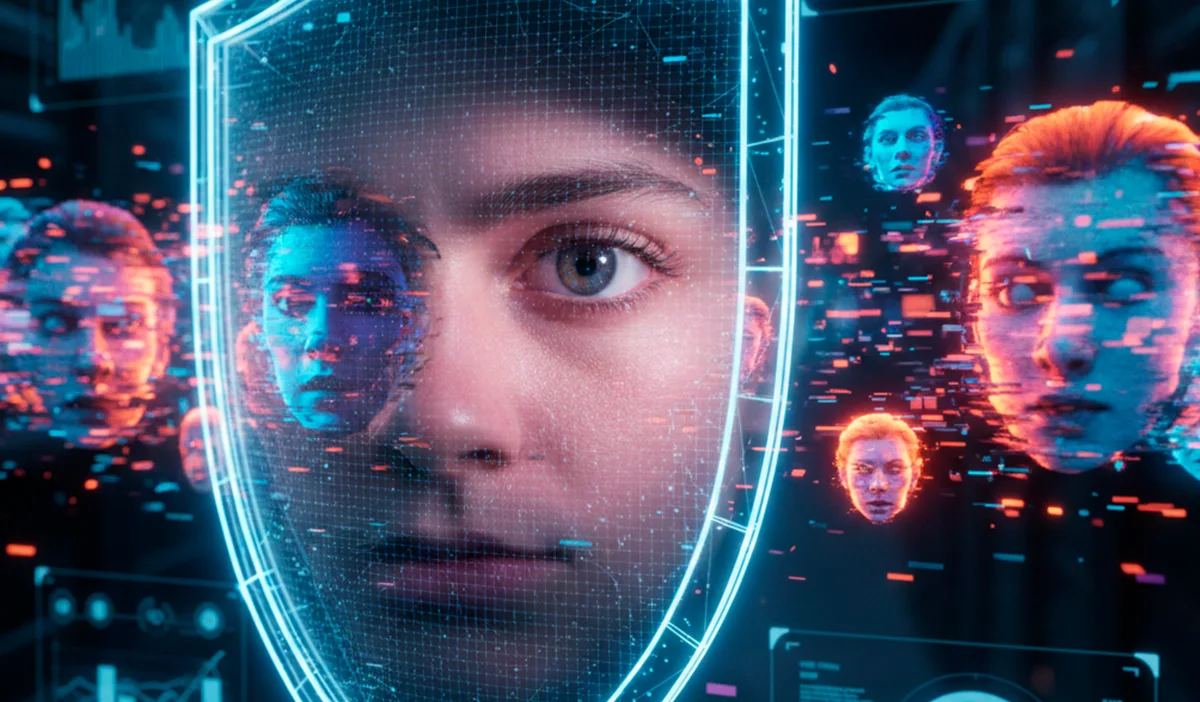
Asking a user to "turn their head" or "blink" in front of the camera no longer holds. During the verification video call, attackers run advanced video injection software that lays a digital layer (deepfake) over a real person's face in real-time.
Ambient lighting and eye movements are replicated with enough precision to fool the human eye and traditional KYC systems built on static rules. The most sophisticated injection attacks go further: they skip the camera sensor entirely and pipe synthetic data straight into the application's biometric API, which leaves standard liveness detection architecturally irrelevant. A technical breakdown of this attack class — and why PAD certification does not address it — is in our analysis of why liveness detection fails against injection attacks.
That pattern sits inside a broader deepfake threat to digital identity that reaches well past banking. The threat turned into a commodity in April 2026: a darknet tool named JINKUSU CAM made KYC bypass available for approximately $15, already pre-configured against Binance, Coinbase, Kraken, and OKX.
2. Identity Documents with Synthetic Metadata
Physical printers no longer define document fraud. Generation is purely digital. Images of IDs or Passports that have never physically existed are produced with "perfect" metadata and digital traces.
OCR tests and MRZ (Machine Readable Zone) validation are the design targets, down to micro-textures that only Joinble's forensic AI is capable of identifying as artificial. Platforms such as OnlyFake, and even consumer AI tools generating fake IDs in minutes, have blown the scale of this problem wide open.
3. Voice Cloning to Bypass MFA
A telephone or audio verification phase still sits inside many onboarding processes. A few seconds of a person's audio in 2026 — pulled from social media, for example — are enough to clone their voice with 99% fidelity.
Those cloned voices then talk to human agents or automated systems, authorizing account openings and slipping past voice-based Multi-Factor Authentication (MFA) systems.
4. Mass Automation of "Ghost" Accounts
Attacks no longer have to be run by hand. Specialized AI agents sit behind infrastructures that fire thousands of simultaneous onboarding attempts across different banks.
A different deepfake, paired with stolen or synthetic data, rides on each attempt. The goal is to saturate the banks' manual review systems and locate security gaps where automatic filtering is less rigorous. That escalation opens a new chapter in the AI vs AI battle for fraud detection.
5. Social Engineering 2.0 with Personalized Avatars
The registration form is not always the starting point. Deepfakes are used to build profiles of "financial advisors" or "account managers" on video platforms.
A familiar face and voice manufacture false trust. Legitimate users are then talked into handing over their own onboarding data, or completing the process under the attacker's supervision. Full control of the newly created account follows.
🛡️ How does modern banking protect itself?
Going back to physical offices is not the answer. Forensic AI is. The AI KYC Dashboard at Joinble looks past what appears on the screen and inspects the atomic integrity of the digital signal:
- Rendering Artifact Detection: We identify pixel micro-errors that deepfakes leave behind when injected.
- Forensic Liveness Analysis: We verify that the video data stream comes directly from a physical camera sensor and not from a virtual memory buffer.
- Behavioral Biometrics: We analyze interaction patterns that a machine cannot simulate naturally.
"Seeing is believing" no longer describes bank onboarding in 2026. Validating to trust does. How Joinble protects banking identity verification at every stage is set out there.
A broader industry standard change sits behind the move from single-signal liveness to combined face, voice, and behavioral analysis. What multimodal liveness verification requires, and why each signal layer matters, is broken down in our analysis of the shift to multimodal biometric liveness as the new KYC standard.
Failing to detect AI-generated fraud at onboarding now carries direct liability under PSD3's Payment Services Regulation — split between the payer's PSP and payee's PSP when controls are found inadequate. Regulatory detail is in what PSD3 and PSR mean for payment firm KYC obligations.
Is your KYC system prepared to detect a next-generation deepfake? Try the Joinble Dashboard today and secure your customers' identity.
Related Articles
Deepfakes: The Challenge of Combating Synthetic Identity in 2026
In a world where AI can replicate any face and voice, traditional KYC is dead. Discover why intelligent identity is the only real defense.

AI Agents in Bank Compliance: Inside FINRA's 2026 Warning
FINRA's 2026 report flags AI agents as a new supervisory risk. Yet banks are deploying them for AML at scale. What compliance teams must know now.

One in 100: How Deepfakes Are Breaking ID Checks at Scale
LexisNexis: 1 in 100 failed identity checks involves a deepfake. At 100 billion annual checks, the math makes this a systemic infrastructure crisis.