Agentic KYC: How Autonomous AI Agents Are Replacing Manual Compliance Reviews
Traditional KYC relies on human reviewers. Agentic KYC uses autonomous AI agents that detect deepfakes, assess risk, and make compliance decisions. Learn how multi-agent architecture reduces 80% of manual reviews while meeting MiCA and AMLD6 requirements.

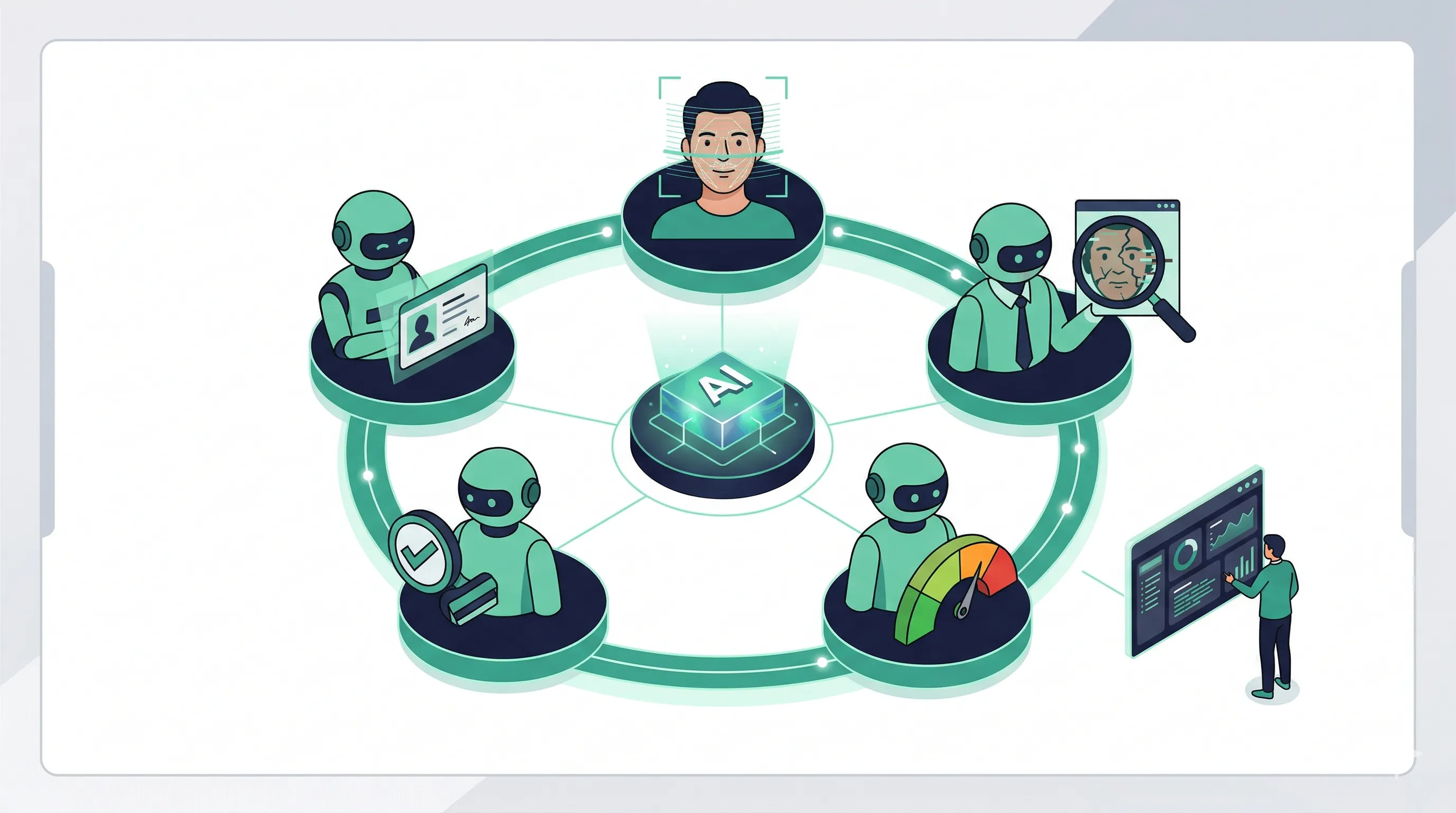
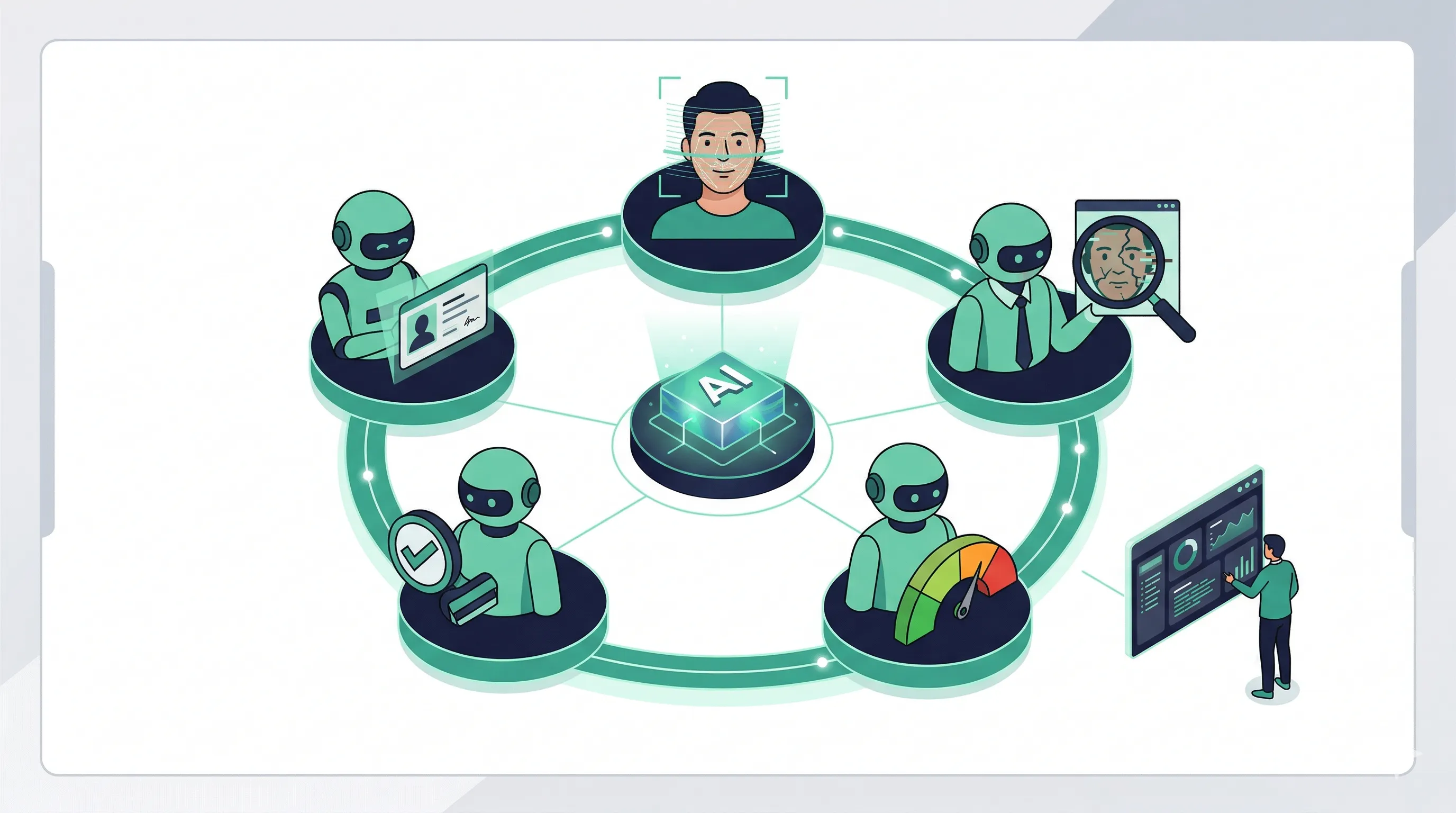
Most “AI-powered” KYC vendors still send the bulk of verification cases to people. The model flags; a reviewer decides. That arrangement is not automation. It is costly triage, and the industry prefers not to say so out loud.
Agentic KYC works on a different premise. A single predictive model is not the decision layer. Specialized AI agents work together without waiting on an “approve” click, verifying identities, spotting fraud, and issuing compliance outcomes on their own.
This is already in production. Since 2024, Joinble has been building and deploying agentic KYC systems for regulated sectors. Below: what the architecture is, how the agents actually split the work, and why the design matters if MiCA, AMLD6, or AMLR deadlines sit on your calendar.
What Is Agentic KYC?
Agentic KYC is a compliance architecture in which autonomous AI agents run the entire identity verification lifecycle — document capture, risk assessment, approval — with only light human involvement.
Where that parts company with traditional AI-assisted KYC:
| Traditional AI KYC | Agentic KYC | |
|---|---|---|
| Decision maker | Human reviewer, assisted by AI scores | AI agents, escalating only edge cases to humans |
| Architecture | Single model + rules engine | Multi-agent system with specialized roles |
| Deepfake detection | Separate tool, checked manually | Embedded agent, runs in real-time on every case |
| Adaptability | Static rules, updated quarterly | Agents learn from each verification in real-time |
| Throughput | Limited by reviewer headcount | Scales with compute, not people |
| Cost per verification | $2-5 (manual review bottleneck) | $0.10-0.50 (agent-first, human-exception) |
A conventional stack looks like this: upload a document, run OCR, emit a risk score, wait for a human to sign off. An agentic stack assigns each of those steps to a specialist agent that can reason, talk to its peers, and decide inside published regulatory bounds.
The Multi-Agent Architecture Behind Agentic KYC
Joinble’s agentic KYC run uses five specialized agents on every verification case, working as a group:
1. Document Verification Agent
Pulls and checks identity-document data for 190+ countries. OCR is only the start. Security features are cross-checked, AI-generated forgeries are hunted, and records are validated against issuing-authority databases.
Anomalies — wrong font rendering, inconsistent holograms, metadata left by generative AI tools — do not trigger an automatic reject. The case is handed to the Forensic Agent instead.
2. Biometric Matching Agent
Matches the selfie or video to the photo on the document. Liveness detection is used to confirm physical presence rather than a still image, a deepfake video injection, or a face swap.
eIDAS 2.0 “high-level liveness detection” is the bar this agent is built to, which means it must defeat presentation attacks (printed photos, screen replays) and injection attacks (virtual cameras, API manipulation). Injection — synthetic faces piped straight into the biometric API, skipping the physical camera sensor — is now the main threat against remote KYC. The technical case is in our write-up of why liveness detection fails against injection attacks.
3. Forensic AI Agent
This agent is the gap between agentic KYC and everything else. On every verification, the Forensic Agent runs a suite of deepfake and synthetic-media checks:
- Video injection detection — identifies virtual camera software and API injections
- Face swap detection — catches real-time deepfake face swaps during liveness checks
- AI-generated document detection — flags IDs created with generative AI tools (which now cost as little as $15 to produce)
- Metadata forensics — analyzes image EXIF data, compression artifacts, and pixel-level anomalies
Deepfake detection is an optional extra on most KYC platforms. Inside an agentic design it is a first-class check on every case, flagged or not. That matters: the battle between forensic AI and malicious agents is moving faster than human review queues can follow.
4. Risk Scoring Agent
Signals from the other agents are combined with external sources (AML databases, PEP lists, sanctions registries) into a dynamic risk score. Static rules engines stop at document validity. This agent applies predictive intelligence to behavioral patterns as well.
When risk thresholds are crossed, the Risk Scoring Agent can fire Enhanced Due Diligence (EDD) on its own, with no human in the loop.
5. Compliance Decision Agent
Approve, reject, or escalate — that last call is made from the other agents’ outputs plus the regulatory framework that applies. Configuration is per jurisdiction:
- EU/MiCA: Applies AMLD6 requirements, Travel Rule checks, and MiCA-specific CASP obligations
- EU/AMLR 2027: Ready for the upcoming harmonized framework with eIDAS-first identity verification — where EUDI Wallet credentials become formally equivalent to face-to-face KYC
- UK/FCA: Applies the Financial Conduct Authority's KYC standards
- Global: Configurable for any jurisdiction's requirements
A human reviewer is pulled in only when the Compliance Decision Agent hits genuine ambiguity — conflicting signals, edge cases, regulatory gray areas. In live traffic that is less than 20% of cases.
Why Agentic KYC Matters Now
Three regulatory clocks are running at once:
MiCA (July 2026): Full KYC/AML compliance is required of every CASP. Miss it and the fine can reach 12.5% of turnover, plus license revocation. Over 50 crypto firms have already lost licenses over KYC failures.
AMLR (July 2027): Directives give way to a single EU regulation. Only eIDAS-certified digital identity methods will be accepted. Regulated entities must support the EU Digital Identity Wallet by December 2027. From day one, the newly operational AMLA authority will directly supervise up to 40 major CASPs and enforce those standards.
eIDAS 2.0: Across Europe, high-level liveness detection becomes the floor for identity verification.
Human review benches will not stretch far enough. An officer clearing 50 cases a day will not catch an AI-generated fake ID that forensic AI spots in 2 seconds. The cost math is blunt: agentic systems drop the price per verification from $2-5 to under $0.50 and raise detection accuracy at the same time.
Agentic KYC vs. Traditional KYC: Real Numbers
Drawn from Joinble deployments with fintech and crypto clients:
| Metric | Before (Manual + AI-assisted) | After (Agentic KYC) |
|---|---|---|
| Cases requiring human review | 70-85% | 15-20% |
| Average verification time | 4-8 minutes | 12-30 seconds |
| Deepfake detection rate | ~60% (manual catch rate) | 99.3% (forensic agent) |
| Cost per verification | $3.20 average | $0.35 average |
| Compliance audit preparation | 2-3 weeks | Real-time (audit-ready logs) |
Cutting manual reviews by 80% is not a headcount wipe. It is how compliance teams spend their hours on the 20% of cases that actually need judgment, instead of stamping obvious approvals.
How to Implement Agentic KYC
Step 1: Assess Your Current State
Chart the KYC path you already run. Find where reviewers burn the most hours. In most organizations, 60-70% of that time is spent on cases that stronger AI could auto-approve.
Step 2: Define Your Agent Boundaries
Autonomy is not the same as no supervision. Write down which calls each agent may make alone and which must escalate. MiCA and similar regimes already say which decisions need a human. EU AI Act's Article 14 — effective August 2, 2026 adds a legal duty: high-risk AI systems have to be built so people can meaningfully monitor them and intervene. Put the escalation paths on paper before that date.
Step 3: Start With One Agent, Expand
Do not stand up five agents on day one. Begin with the Document Verification Agent (highest volume, simplest path). Measure how far manual reviews fall. Add the Forensic Agent next, then Biometric. Earn trust in stages.
Step 4: Integrate With Your Stack
APIs and webhooks attach agentic KYC to the CRM, case management, and compliance reporting tools you already use. At Joinble, the workflow builder lets you set agent behavior without writing code.
Step 5: Monitor and Audit
Every agent decision must be logged, explainable, and auditable. This is not optional — MiCA and AMLR require full audit trails. Agentic systems actually make this easier than manual processes because every decision has a documented reasoning chain. Note that in the United States, SR 26-2 — the April 2026 model risk management guidance from the Fed, OCC, and FDIC — explicitly excluded agentic AI from its formal scope, creating a governance gap that institutions must address independently. FINRA, by contrast, has formally classified AI agents as an active supervisory priority in its 2026 Oversight Report, with binding requirements for audit trails and human checkpoints — see what the FINRA framework requires. EU-regulated agentic deployments face the binding obligations of the AI Act instead.
The Future: Know Your Agent (KYA)
AI agents are starting to act on their own inside financial systems — not only checking identities, but also moving money, running portfolios, and negotiating contracts. A new question follows: how is the agent’s own identity verified?
That question is Know Your Agent (KYA), KYC extended into the agentic economy. We already confirm that a person is who they say they are. The same bar will apply to an AI agent:
- Is authorized by a verified human
- Operates within defined boundaries
- Has not been tampered with or compromised
- Maintains an auditable chain of actions
Companies like Visa are already building infrastructure for agentic commerce. The compliance layer that identifies those autonomous systems is the next fight.
KYA is not the last word. The IMF’s April 2026 warning opens a second front: holding someone accountable for every transaction an AI agent runs on a verified human’s behalf — the Know Your Human compliance model. KYA certifies the agent; KYH keeps the human on the hook.
FAQ
What is the difference between AI-assisted KYC and agentic KYC?
AI-assisted KYC puts models next to human reviewers (scoring, flagging, OCR). Agentic KYC lets autonomous AI agents issue verification decisions on their own and escalates only edge cases. Manual reviews drop by 80%, with higher accuracy.
Does agentic KYC meet MiCA compliance requirements?
Yes. MiCA-specific CASP rules — AML/KYC checks, Travel Rule compliance, Enhanced Due Diligence triggers — can be applied by an agentic KYC system. Each agent decision is written to an audit log, as the regulation requires.
How does agentic KYC detect deepfakes?
A Forensic AI Agent dedicated to the job runs on every verification, looking for video injection, face swaps, AI-generated documents, and metadata anomalies. It is wired into the pipeline, not bolted on, and it runs without a separate trigger.
Can small companies use agentic KYC?
Yes. You do not have to assemble a multi-agent stack yourself. Joinble and similar platforms sell agentic KYC as a service with no-code workflow configuration. Low-risk cases start at $0.10 per verification.
What regulations require agentic-level KYC?
No regulation mandates agentic architecture specifically. However, MiCA (2026), AMLR (2027), and eIDAS 2.0 set requirements for deepfake detection, real-time monitoring, and audit trails that are practically impossible to meet at scale with manual review teams. The EU AI Act's high-risk classification for AI-driven risk scoring and automated compliance decisions — now with a revised deadline of December 2, 2027 following the EU Digital Omnibus on AI — also shapes what agentic KYC systems must document and how they must surface human oversight. The broader policy direction is clear: the ABA, Better Identity Coalition, and FSSCC's 20-point plan against AI identity fraud explicitly calls for the continuous, adaptive verification models that agentic architecture enables.
How long does it take to implement agentic KYC?
Document verification plus risk scoring can be live in 2-4 weeks through API integration. A full multi-agent rollout with forensic AI and compliance automation usually needs 6-8 weeks.
Related Articles

Visa Launches Agentic Ready: AI-Powered Autonomous Commerce Gets Payment Infrastructure
Visa introduces its Agentic Ready program in Europe with 21 issuing banks. We analyze what it means for identity verification, KYA, and digital trust in agentic commerce.

Know Your Human: KYC's Agentic Payment Gap
The IMF warns AI agents making payments expose critical KYC gaps. Discover why 'Know Your Human' is now the compliance imperative for agentic commerce.
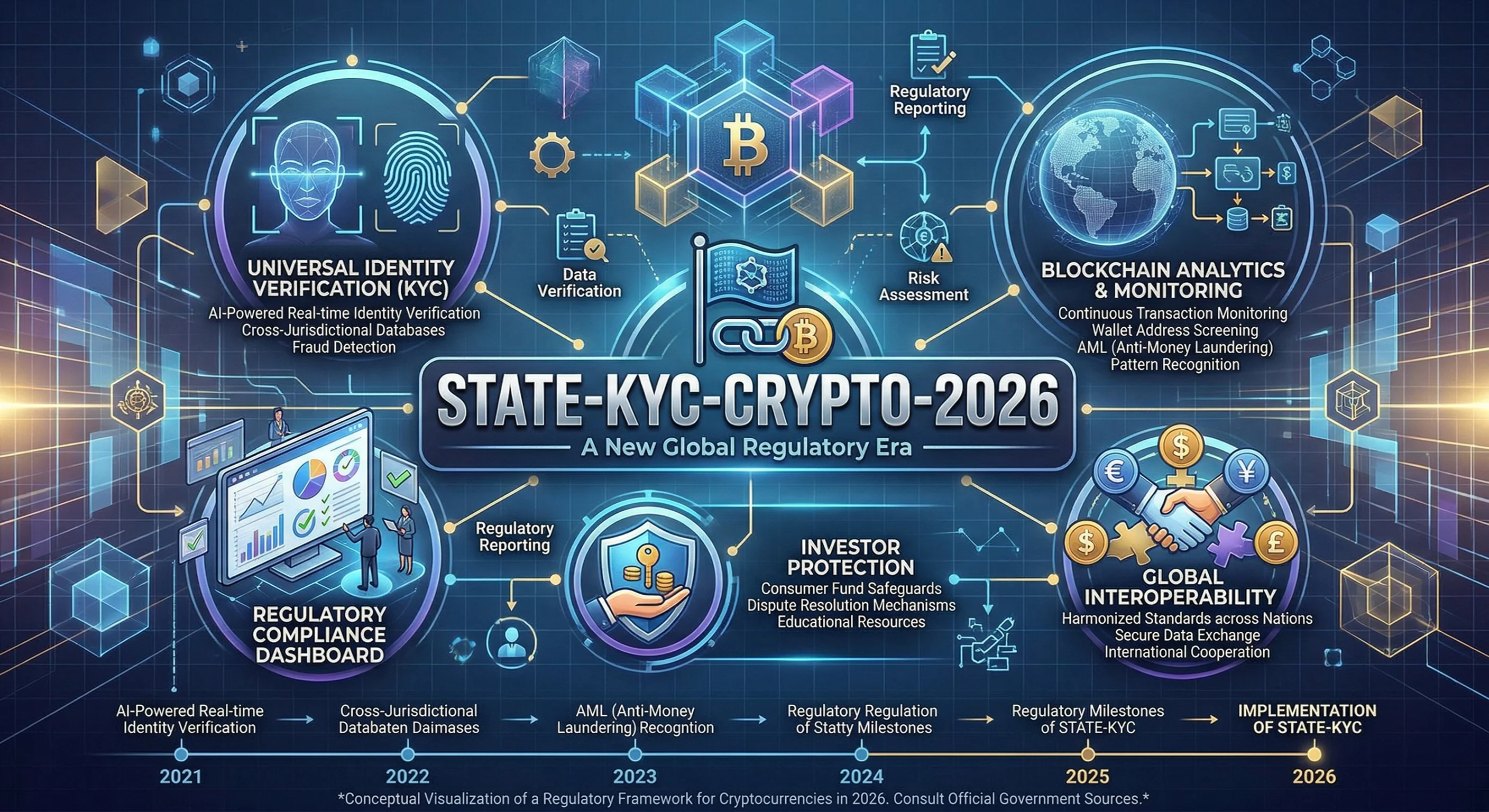
State of KYC in Crypto 2026: The Year Identity Became Autonomous
Annual report on the state of identity verification in the crypto sector. Data, trends, and the impact of MiCA, AI Agents, and real-world asset tokenization on KYC.