State of KYC in Crypto 2026: The Year Identity Became Autonomous
Annual report on the state of identity verification in the crypto sector. Data, trends, and the impact of MiCA, AI Agents, and real-world asset tokenization on KYC.

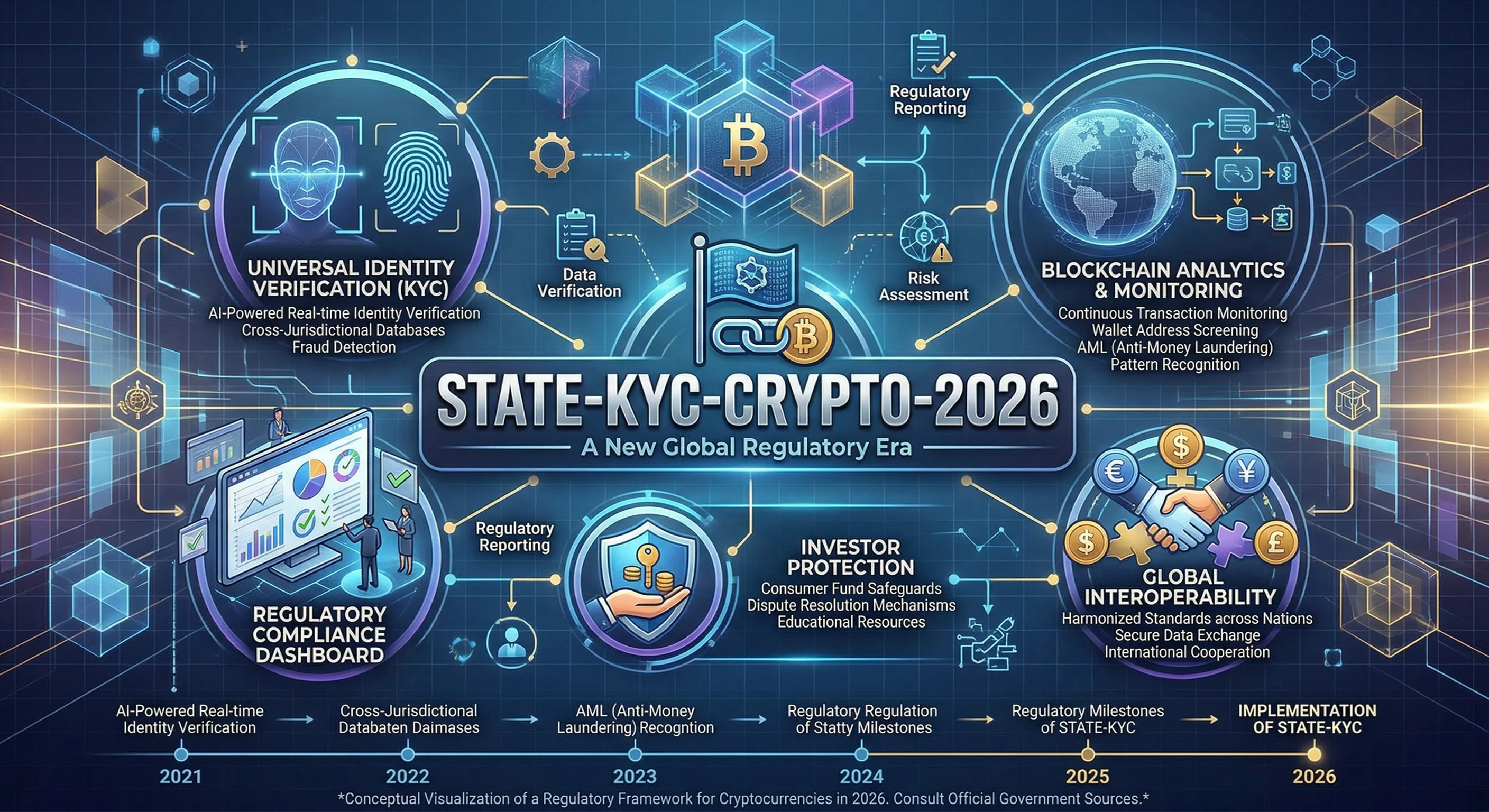
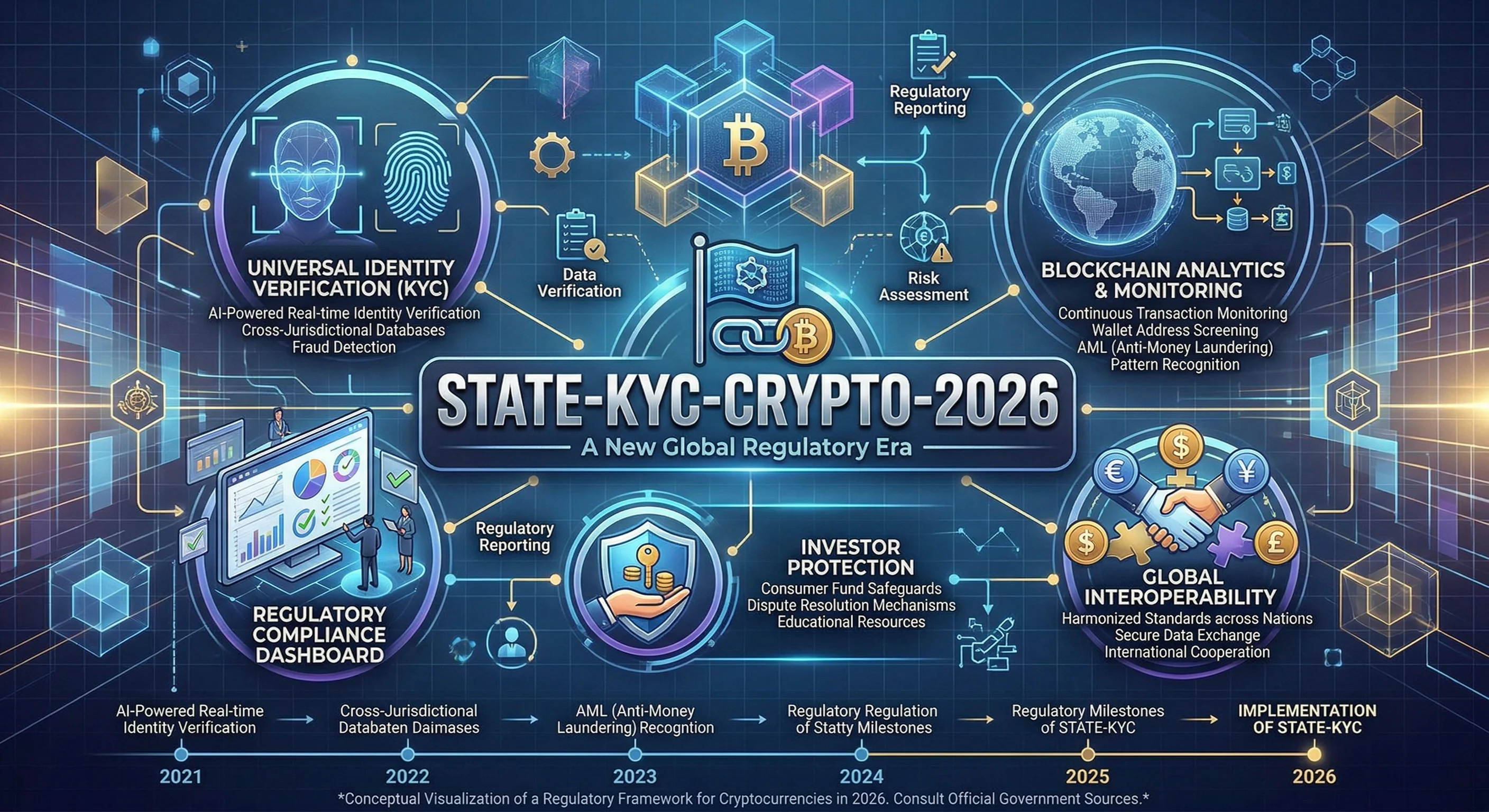
Crypto faces five compliance deadlines in 2026. Each one squeezes through a single bottleneck: showing who — or what — sits on the far side of a transfer.
Our yearly take on KYC in crypto lives here. Opinions are not the source. Production numbers are, plus the dates that actually shift budgets, with a link to the full breakdown behind each figure. Scan the snapshot first, then follow the thread that matches your stack.
Crypto KYC 2026 at a glance
| Signal | 2026 reading | Full breakdown |
|---|---|---|
| MiCA Travel Rule | Mandatory July 1, 2026 — no minimum threshold | What CASPs still get wrong |
| UK MLR Amendment 2026 | Effective June 30 — crypto correspondent rules from Feb 2027 | What changes for UK CASPs |
| US GENIUS Act CIP Rule | Proposed June 2026 — stablecoin issuers treated as financial institutions under BSA | What US stablecoin issuers must do |
| Onboarding cost vs. pre-MiCA | +40–60% | — |
| Drop-off on flows over 3 min | 25–35% | — |
| RWA value tokenized | Past $20B | Why KYC is the bottleneck |
| Manual review with AI agents | −80% | Agentic KYC, explained |
| Biometric manipulation in verification attempts | ~7% | AI-generated fake IDs |
| Real-time deepfakes vs. 2025 | +300% | — |
| EUDI Wallet live in every member state | By Dec 2026 | eIDAS 2 and the wallet mandate |
| UK FCA crypto authorisation gateway | Opens Sept 30, 2026 — deadline Feb 28, 2027 | KYC compliance checklist for applicants |
Figures reflect Joinble's verification data and public regulatory calendars as of Q1 2026.
MiCA: licensing was easy, the Travel Rule isn't
A CASP license out of the CNMV, AMF or BaFin is ordinary now. Originator and beneficiary data on every transfer, no minimum amount, enforced from July 1, 2026 — that is the Travel Rule, and that is the hard part. Onboarding cost climbed 40–60% on the back of that one demand. Drop-off hit 25–35% wherever a flow takes longer than three minutes.
Read the full breakdown: what the MiCA Travel Rule requires and where CASPs are still failing.
RWA tokenization: identity is the ceiling, not the chain
Tokenized real-world assets passed $20B this year. Chains scale. Identity does not. Tokenize a Madrid property on Ethereum, sell it to a Singapore investor, and the KYC has to satisfy three regulators at the same time. Protocols are already doing 500–5,000 verifications a month by hand.
Full analysis: asset tokenization and the KYC bottleneck.
AI agents flip the question from "who are you" to "who sent you"
Reactive KYC is giving way to a proactive model. An agent walks the user through the flow, runs checks on-device, and clears 85–90% of cases without a human. A second question then appears: if an agent can move funds for you, who verifies the agent? Know Your Agent (KYA) is the answer people are using, and Visa's Agentic Ready program is the first serious attempt at it.
Go deeper: agentic KYC and Know Your Agent.
Deepfakes are the default attack now, not the exotic one
Some form of biometric manipulation now shows up in around 7% of verification attempts on crypto exchanges. Real-time face-swaps during liveness checks sit 300% above 2025. Roughly 40% of AI-generated IDs slip past OCR-only document checks. Passive liveness and injection detection have left the optional column.
Full teardown: AI-generated fake IDs and synthetic fraud.
US stablecoins: the regulatory floor finally arrives
A proposed Customer Identification Program rule for US payment stablecoin issuers landed on June 22, 2026 from FinCEN and four co-agencies. Finalized, it would treat those issuers as financial institutions under the Bank Secrecy Act and lock in bank-grade CIP — name, date of birth, address, and government ID before account opening. August 21, 2026 is when comments close. Mid-2027 is the likely effective window.
Global stablecoin KYC had one large hole left. This fills it. MiCA and AMLR already bind EU-based CASPs; the GENIUS Act CIP rule puts US issuers on the same baseline.
Full breakdown: GENIUS Act KYC requirements for stablecoin issuers.
FATF's July 2026 report supplies the backdrop: stablecoins now account for 84% of all illicit virtual asset flows worldwide, with $154 billion laundered in 2025. Analysis: FATF stablecoin money laundering — what CASPs must do now.
What we expect in H2 2026
Three items sit on our list. The EUDI Wallet going live across all member states by December. AMLA taking direct supervision of the largest CASPs. KYC providers consolidating around AI fraud detection and edge-first processing.
Our one prediction for crypto compliance
One-time KYC is already dead. Burial is the only step left. AMLA can fine a CASP for a sanctioned wallet that sailed through onboarding six months earlier, so continuous re-verification is the only model that holds. Treat KYC as a gate you clear once and you will be the firm explaining a breach in 2027.
Building against that future? Here is how we approach crypto KYC.
What happened when the MiCA transitional window closed and 80% of EU exchanges exited is the post-July 2026 update: Post-MiCA: What 80% Exit Means for Crypto KYC.
This report was produced by the Joinble team, specialists in AI-powered identity verification and edge-first technology. Want to see how our AI Agents can reduce your KYC manual review by 80%? Request a demo.
Related Articles

Post-MiCA: What 80% Exit Means for Crypto KYC
After MiCA's July 2026 deadline eliminated 80% of EU crypto exchanges, licensed CASPs still face critical KYC gaps that regulators are closing in on.

The Era of Autonomy: Why 2026 is the Year of AI Agents
Chatbots are a thing of the past. Discover how autonomous agents are transforming business productivity by executing complex tasks without constant supervision.

FATF July 2026: Stablecoins Fuel 84% of Crypto Crime
FATF's July 2026 report reveals stablecoins now drive 84% of illicit crypto flows, with $154 billion laundered in 2025. What every CASP must do now.