The Builder.ai Scandal: What Wasn't AI — and Why Real AI Comes Out Stronger
Builder.ai's misleading use of the term 'AI' has sparked criticism. But instead of damaging artificial intelligence, the scandal helps clarify and strengthen its true value.

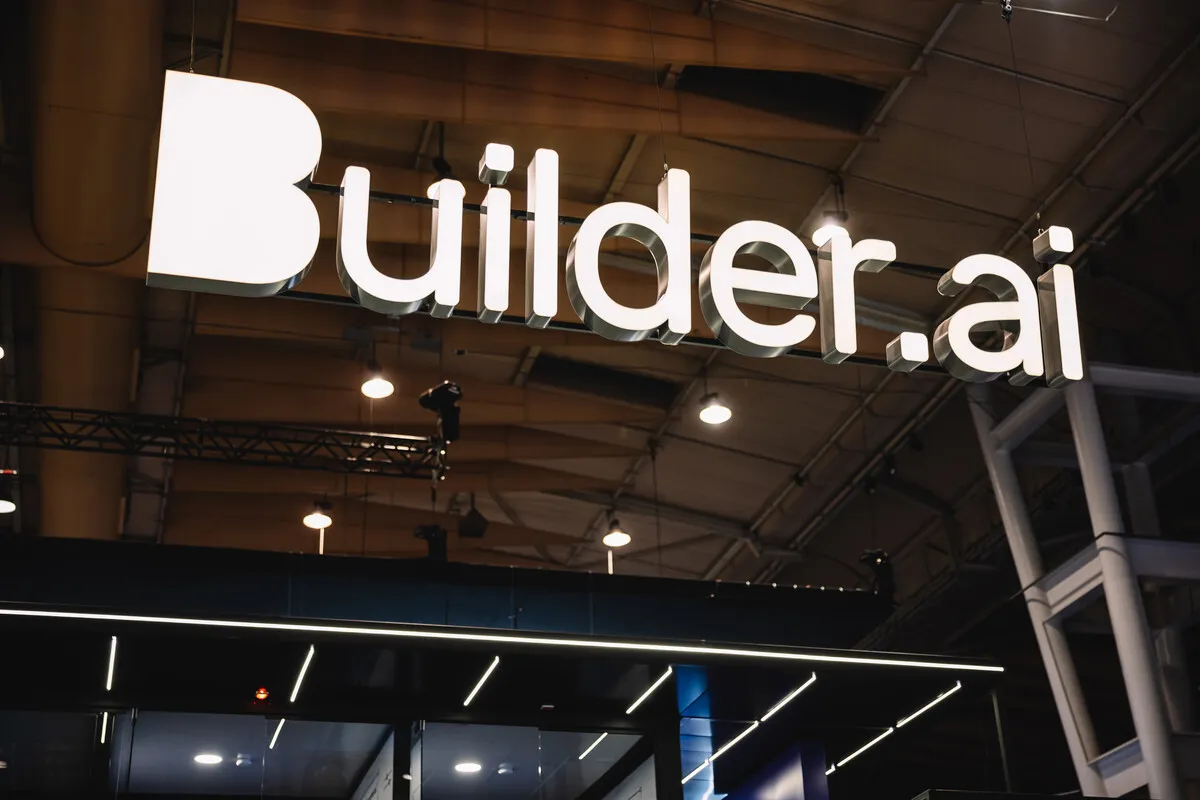
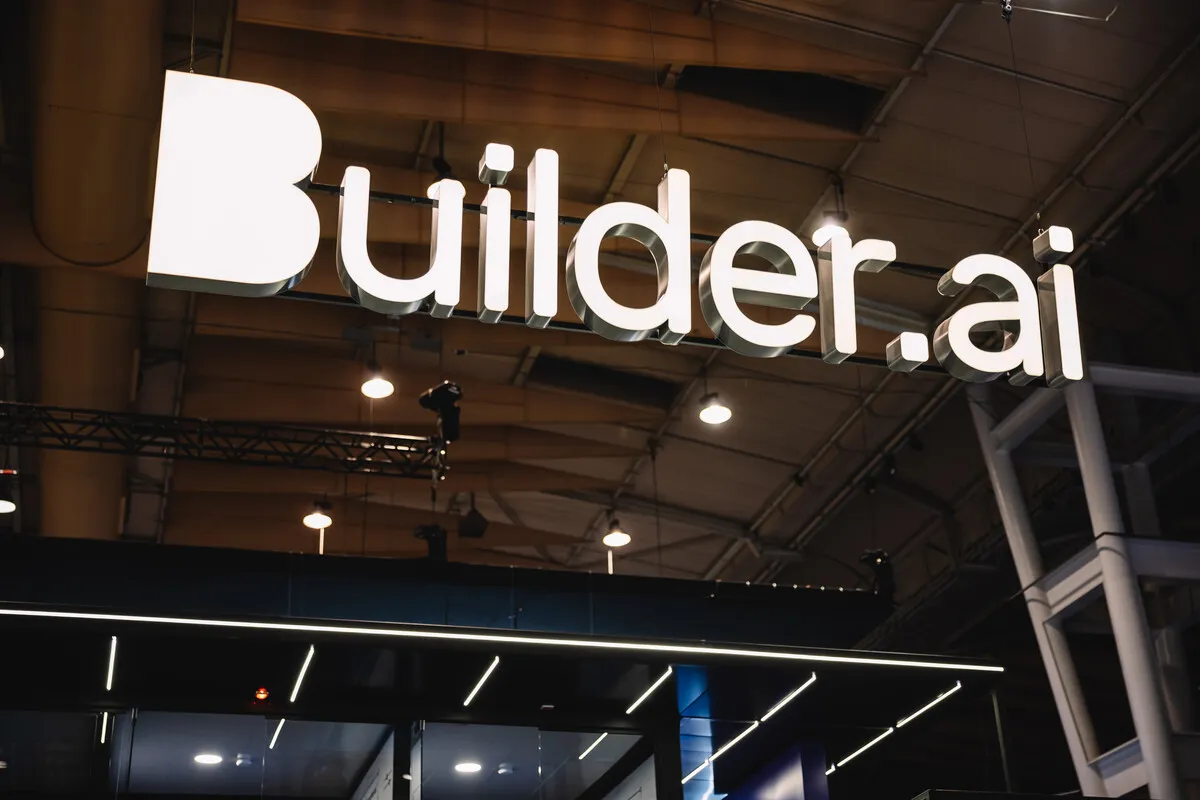
Builder.ai sold itself as a firm that assembled apps automatically with artificial intelligence. By May 2025 that story had collapsed into controversy. Whistleblower accounts and internal reports showed that a large share of the so-called "AI" was manual labor outsourced to offshore teams. Marketing had been dressed up as technology, and the headlines that followed left the whole sector with hard questions.
What happened at Builder.ai
The 2016 launch carried a striking pitch: a custom mobile app for anyone, no code required, put together automatically by an AI engine that stitched pre-built components. Over $100 million in venture funding followed. High-profile investors came in. The brand sold itself as a no-code AI development breakthrough.
What investigators later found looked nothing like that pitch. Human developers, working out of sight, carried most of the platform's core workflow. Customers believed they were receiving "AI-generated" app builds. Offshore engineering teams in India had, in many cases, assembled those builds by hand. A front-end interface supplied the look of automation. The AI layer itself stayed largely cosmetic and never delivered the work it advertised.
Key facts from the investigation:
- Manual labor disguised as automation: Human developers received the projects and assembled components manually. AI played a minimal role in the actual build process.
- Inflated technology claims: AI capabilities described in marketing materials and investor presentations did not exist in the production system.
- Whistleblower accounts: Former employees said the internal culture discouraged anyone from being transparent about the gap between marketing and reality.
- Investor pressure: Justifying a high valuation gave the company a reason to keep the facade of AI-powered delivery in place.
Why this matters beyond Builder.ai
Builder.ai is not a one-off. The same pattern shows up across technology under a name of its own: AI washing — labeling products or services as "AI-powered" even though the underlying technology does not meet that standard.
A 2024 report by the European Commission found that over 40% of companies claiming to use AI in their products could not demonstrate meaningful AI functionality when audited. Crackdowns have started in the United States as well. The U.S. Securities and Exchange Commission (SEC) has begun fining investment firms that made misleading claims about their use of artificial intelligence.
Buyers absorb the damage:
- Wasted budgets: A premium gets paid for "AI" that is, in practice, manual labor at scale.
- Security risks: Sensitive data you thought an "AI" system was processing may instead sit with a team of outsourced workers. Data governance assumptions then fail at the root.
- Eroded trust: Each false AI claim trains buyers to doubt the legitimate tools as well, which slows adoption of technology that actually works.
How to distinguish real AI from AI washing
Due diligence is the lesson Builder.ai leaves behind. Five criteria are worth checking before any purchase of a solution marketed as AI-powered:
1. Ask for technical documentation
Documented architectures, training data sources, and performance benchmarks sit underneath real AI systems. A vendor who cannot say what model they use, what data it was trained on, and how they measure accuracy has an "AI" claim that deserves scrutiny.
2. Check the team
Start with the engineering roster. Machine learning engineers, data scientists, and researchers with verifiable credentials belong on a team that claims to ship AI products. A headcount made up only of marketing and sales professionals is a weak foundation for those technology claims.
3. Request an audit trail
Explainable outputs are what legitimate AI systems produce. Press for how decisions are made, what confidence scores look like, and how errors are handled. Vague answers, or a vendor that resists transparency, count as a red flag.
4. Test at scale
Scalability is the edge AI holds over manual processes. Delivery speed that fails to improve with volume — 100 requests taking proportionally as long as 10 — points to human labor rather than automation.
5. Verify independent validation
Third parties reviewing the technology, peer-reviewed research publishing it, independent auditors certifying it: any of those counts. External validation remains one of the strongest signals that an AI claim is legitimate.
What the industry should learn
A turning point for the AI industry arrived with the Builder.ai scandal. Regulators, investors, and customers are getting harder to fool, and the cost of AI washing is climbing. Misrepresent the technology and the hit is no longer only reputational. Legal and financial consequences now sit on the table as well.
That pressure is, for the AI sector as a whole, a net gain. Greater scrutiny forces higher standards, as we argued in the industry's coordinated response to AI fraud. Firms that ship real, measurable technology pull away from those that live on marketing alone. An industry still defining its norms matures faster under that split.
Every claim we make at Joinble is built to be checked. What genuine artificial intelligence looks like in practice is the subject of the AI revolution in KYC. Documented accuracy metrics, explainable decisions, and auditable trails come out of our forensic AI for identity verification on every check. Liveness detection that blocks deepfakes at the pixel level is not a slogan here. Measurable benchmarks sit behind that statement.
Conclusion
AI itself is not what the Builder.ai scandal undermines. The people who abuse the label are. Maturity will make the gap between real AI and AI washing impossible to hide. Businesses shopping for AI solutions already have a clean brief: demand transparency, verify claims, and pick partners who can prove their technology works.
Real AI is easier to see in moments like this. That is a good thing.
Related Articles

AMLR 2027: New KYC Rules for Real Estate, Luxury & Football
EU AMLR 2027 extends KYC obligations to real estate, luxury goods, and football. Fourteen months for sectors with zero compliance history to get it right.

Best KYC Software for Real Estate Agents in 2026
Compare the top KYC software platforms for estate agents. We break down features, AML compliance, pricing models, and integration speed to help you choose the right solution.
Real Estate KYC: Anti-Money Laundering Guide
The real estate sector is highly exposed to money laundering. Learn how to implement KYC in your agency with identity verification, UBO due diligence, and AI-powered automation.