KYC Beyond Banks: The New SME Reality
KYC is becoming a critical layer to protect digital transactions for startups, SMEs, and non-financial businesses. AI makes it possible.



For years, KYC (Know Your Customer) was almost exclusively associated with banks, fintechs, and large financial institutions. Regulation, compliance, and complex processes felt completely out of reach for small businesses, startups, and non-financial digital companies.
That has changed.
Not because of regulation — but because of operational reality.
Today, any company operating online, handling payments, identities, or digital access is exposed to fraud, impersonation, and abuse. KYC is no longer a banking requirement; it is a digital survival tool.
The new risk: transactions without reliable identity
Small digital businesses now face threats that were once reserved for large enterprises:
- Payment and refund fraud
- Mass creation of fake accounts
- Identity impersonation
- Abuse of promotions or free trials
- Unauthorized access to digital services
Marketplaces, SaaS platforms, mobility apps, gaming, crypto, short-term rentals, and even e-commerce businesses already handle valuable transactions. These invisible markets now require robust KYC more than ever. And where there is value, fraud follows.
Without a minimum identity verification layer, risk scales fast.
KYC does not mean bureaucracy (when done right)
This is the biggest misconception:
many companies avoid KYC because they associate it with friction, long forms, and user drop-off.
That is traditional KYC.
Not modern KYC.
Thanks to AI, it is now possible to:
- Verify identity in seconds
- Use biometrics instead of complex documents
- Adapt verification levels to real risk
- Trigger KYC only when it adds value
For small businesses, this means security without killing conversion.
KYC as a competitive advantage for startups and SMEs
KYC is no longer just defensive. When done properly, it becomes a clear advantage:
- Less fraud → lower operational costs
- Verified users → higher trust
- Fewer disputes and chargebacks
- Better relationships with payment providers
- Scalable growth without regulatory shocks
In many cases, the cost of not having KYC is higher than implementing it. For a detailed breakdown of what verification actually costs small businesses, see our guide on KYC costs for SMEs.
AI and KYC: what makes it accessible
The reason KYC is now reaching small businesses is simple: AI made it viable.
- Computer vision models for document checks
- Facial biometrics with liveness detection
- Automated risk evaluation
- Adaptive flows based on behavior
This removes the need for compliance teams, manual reviews, or rigid processes. KYC becomes software, not bureaucracy. If you are new to the concept, our KYC Know Your Customer guide covers the fundamentals.
Where KYC is already essential (even if it doesn’t look like it)
More non-financial sectors are adopting KYC today:
- P2P marketplaces
- Subscription platforms
- Sharing economy apps
- Crypto and Web3 projects
- B2B SaaS handling sensitive data
- Physical or digital access platforms
Not because of legal pressure, but because of business protection.
Joinble’s approach: frictionless KYC for any business
At Joinble, we believe KYC should not be a privilege reserved for banks.
It should be basic infrastructure, accessible to startups and SMEs as well.
That’s why we build adaptive verification flows powered by AI and biometrics, activated only when they create real value. Users barely notice them — businesses do.
Conclusion
KYC is no longer optional for digital small businesses.
The real difference lies in how it is implemented.
With AI, KYC stops being an obstacle and becomes an invisible layer of trust. And in an increasingly digital world, trust is the most valuable asset.
The companies that understand this early will move ahead.
Related Articles
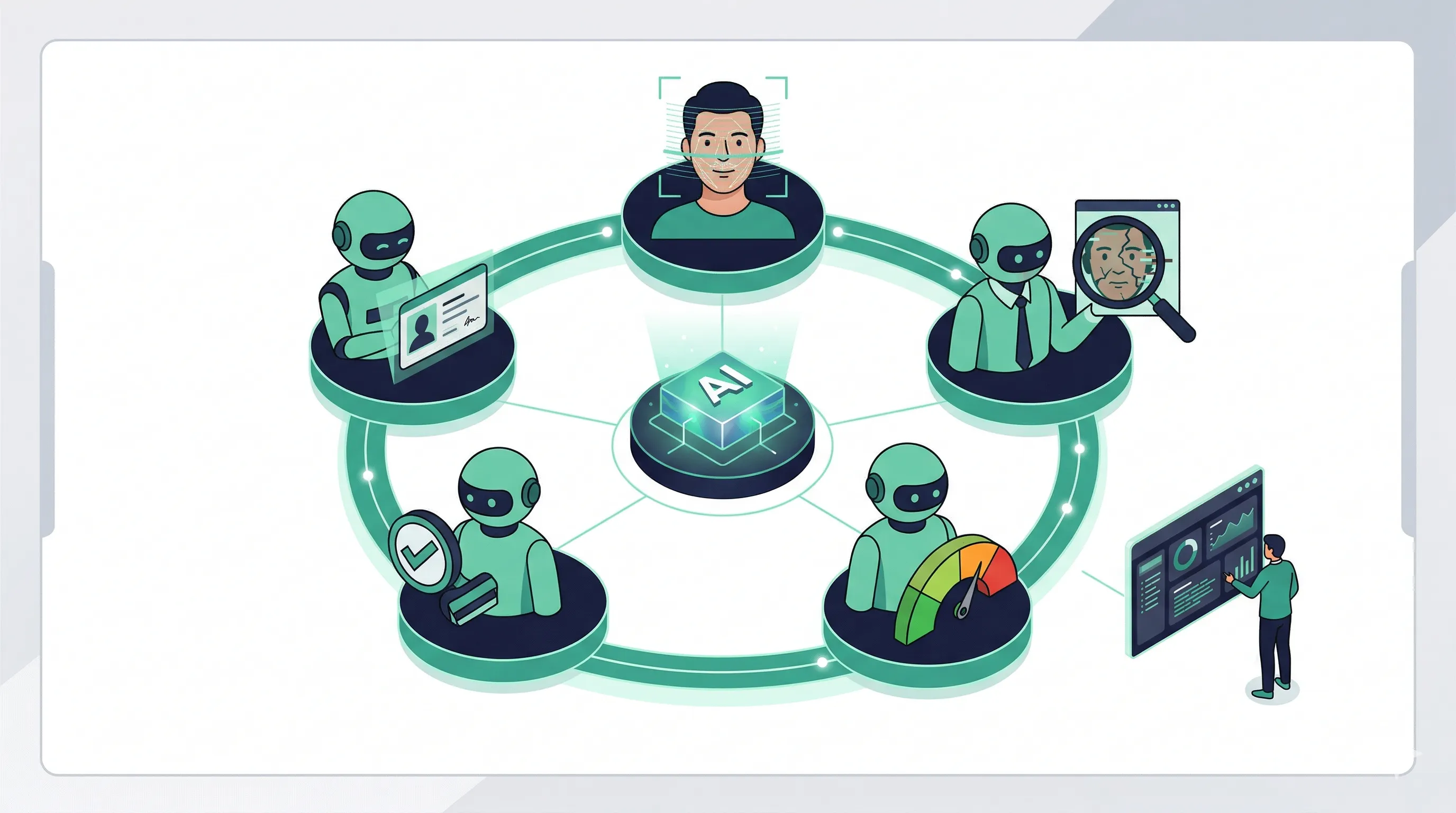
Agentic KYC: How Autonomous AI Agents Are Replacing Manual Compliance Reviews
Traditional KYC relies on human reviewers. Agentic KYC uses autonomous AI agents that detect deepfakes, assess risk, and make compliance decisions. Learn how multi-agent architecture reduces 80% of manual reviews while meeting MiCA and AMLD6 requirements.

Asset Tokenization and KYC: Key to Token Economy
Asset tokenization is reshaping finance, real estate, and art markets. But without robust identity verification, the token economy cannot scale. Discover how AI-powered KYC enables compliant, secure tokenization.

KYC 3.0: From reactive verification to predictive intelligence
Discover how KYC 3.0 transforms digital onboarding by shifting from validating documents to predicting risk through behavioral patterns and AI.